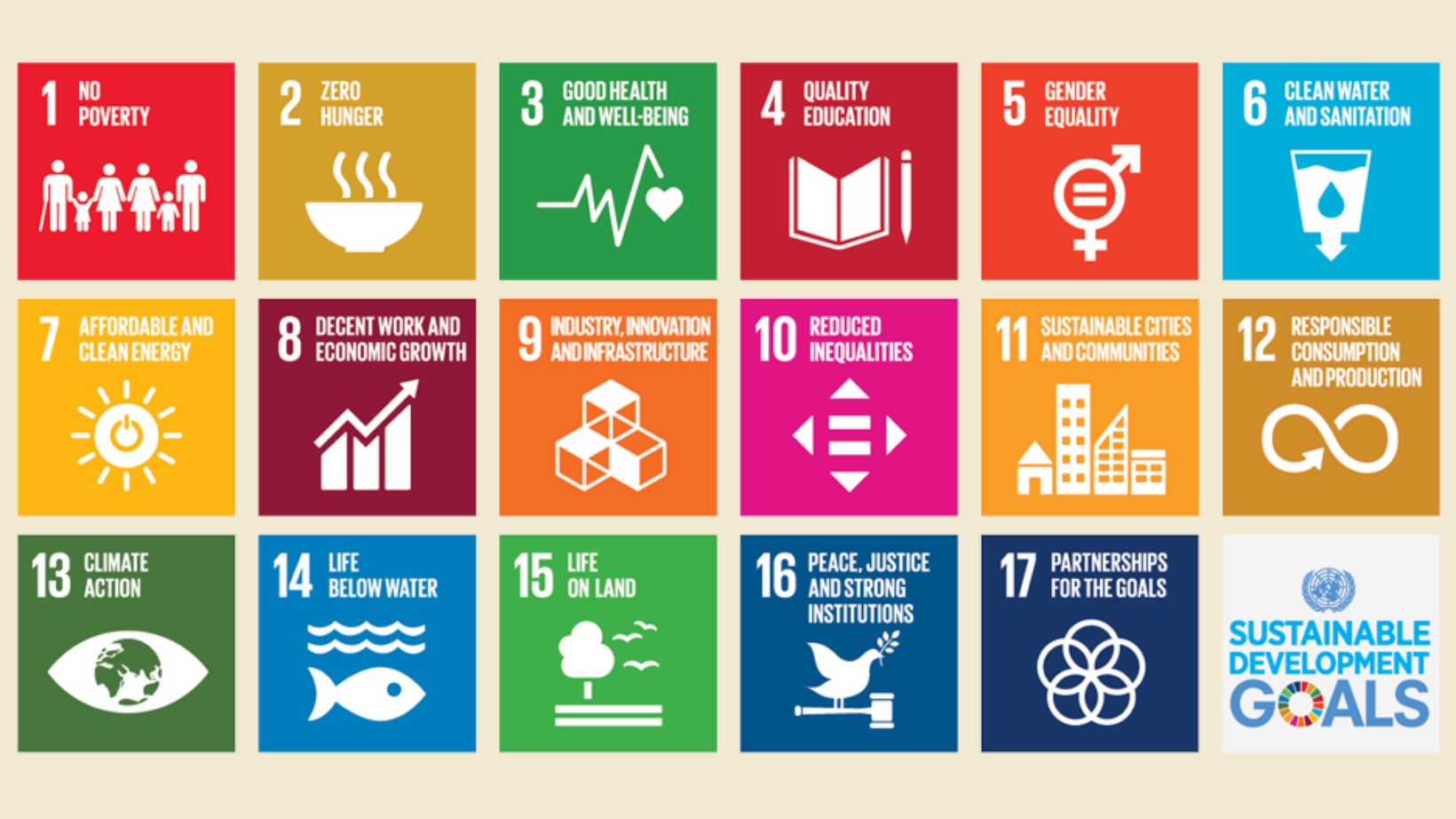
The 2030 Agenda for Sustainable Development is a UN program signed in September 2015 by the governments of all 193 members. It consists of a list of 17 goals, aiming to promote a shared action program for Sustainable Development by 2030. Recently, these Sustainable Development Goals have become an important reference point for companies, as they can be used as a tool to measure their level of sustainability and to define a long-term improvement strategy. Moreover, several goals have a close correlation with the textile industry and above all, with the social and environmental costs of fast fashion: the 2030 Agenda promotes decent work conditions, responsible production and consumption, environment and natural resources protection.
Let's see in detail which are these 17 goals, and why they concern the textile sector and the world of fashion too.
The Sustainable Development Goals
- No poverty: the first goal of the 2030 Agenda for Sustainable Development is to end poverty by 2030, making essential goods and services such as food, water, medical care and education accessible to everyone in the world.
- Zero hunger: defeat hunger, ensuring everyone in the world access to a healthy nutrition and sufficient food throughout the year, also through the promotion of more sustainable forms of agriculture.
- Health and well-being: guarantee a healthy life and promote the well-being, at any age.
- Quality education: provide to everyone a quality, fair and inclusive education, and promote lifelong learning opportunities.
- Gender equality: achieve true gender equality, stop all forms of discrimination and violence, and promote the empowerment of women and girls everywhere in the world.
- Clean water and sanitation: ensure the availability and sustainable management of drinkable water, as well as access to adequate sanitation facilities.
- Affordable and clean energy: guarantee access to economical, reliable, sustainable, and modern energy systems. The aim is to promote the use of clean and renewable energies at affordable costs, also in the developing countries.
- Decent work and economic growth: encourage lasting, inclusive, and sustainable economic growth, full and productive employment, and decent work conditions for all.
- Industry, innovation, and infrastructure: support the development of technology, research, and innovation. Investments in sustainable infrastructures and in the scientific and technological research increase economic growth, create job opportunities, and promote prosperity.
- Reduced inequalities: reduce inequalities within countries and among countries.
- Sustainable cities and communities: reduce the environmental impact of the cities, especially in terms of air quality and waste management.
- Responsible consumption and production: promote sustainable production and consumption, within the carrying capacity of ecosystems.
- Climate action: take action to stop the climate change and its effects, such as global warming.
- Life below water: reduce all types of marine pollution, protecting marine ecosystems and regulating fishing in order to make it more sustainable.
- Life on land: protect ecosystems, the basis of safe food and human health, stop deforestation and desertification and protect biodiversity.
- Peace, justice, and strong institution: promote peaceful and inclusive societies, which reject any forms of violence and any forms of organized crime.
- Partnership for the goals: last, but not least, goal number 17 of the 2030 Agenda emphasizes the importance of the cooperation among countries to achieve all the Sustainable Development Goals.
The fashion industry and the 2030 Agenda for Sustainability
Many of these goals have a close relation with fashion industry, especially with the sustainability problems of the so-called fast fashion. In fact, we know that this is a not responsible production, since 85% of 80 billion new garments produced every year are thrown away within 365 days after purchase (goal 12). Fashion industry is responsible for almost 10% of global CO2 emissions (goal 13), and 20% of water pollution (goal 4). Various plantings and productions use too high quantities of water, compromising the availability of natural resources necessary for human needs (goal 6).
Moreover, there are several social problems: especially in the developing countries, many workers are minors forced to leave the school early (goal 4), and women subjected to several kinds of discrimination (goal 5). A recent report on 108 fashion brands in 14 countries highlighted how often workers are forced to accept irregular contracts with unrealistic daily goals, and exhausting working hours (goal 8). For this reason, the 2030 Agenda and its Sustainable Development Goals are more important than ever, even in the fashion industry.
As producers, we are committed to measuring our level of sustainability, following a path of continuous improvement. As consumer, you can make sure to choose brands that meet these goals, for example by using sustainable fabrics and recycled materials, by reducing waste and promoting craftsmanship. Any contribution from companies, and from consumers as well, will be important to ensure that the Sustainable Development Goals of the 2030 Agenda will be achieved, allowing us to live in a more sustainable world.